
The Kreg Pocket-Hole Jig: Complete Guide to Pocket-Hole Joinery and Choosing the Right Jig
The Kreg Pocket-Hole Jig is a popular woodworking tool designed to make joining wooden boards faster, easier, and more consistent. Whether you’re building cabinets, bookshelves, tables, picture frames, or other woodworking projects, a pocket-hole jig can help you create secure joints without complicated traditional joinery.
One of the biggest advantages of pocket-hole joinery is its accessibility. With a suitable jig, drill, clamps, and compatible screws, even a beginner can learn to connect wooden components accurately.
However, not every pocket-hole jig offers the same features. Some are compact and designed for occasional repairs, while others provide integrated clamping systems and faster setups for repeated workshop use.
In this guide, we’ll explain how pocket-hole joinery works, explore five Kreg pocket-hole jig models, compare their advantages and limitations, and show you how to use a pocket-hole jig effectively.
We’ll also cover screw selection, material thickness, joint strength, common mistakes, and frequently asked questions.
What Is Pocket-Hole Joinery?
Pocket-hole joinery is a woodworking technique that connects two pieces of wood using screws driven through angled holes.
A pocket-hole jig guides a specialized stepped drill bit into one workpiece, creating a recessed opening for the screw head and an angled pilot hole.
Once the pocket hole has been drilled, a compatible screw is driven through the first workpiece into the adjoining piece.
The result is a relatively quick connection that can be positioned on the less visible side of a project.
Pocket-hole joinery is especially useful for cabinet face frames, furniture components, shelving projects, and many types of woodworking assemblies.
For a more detailed discussion of joint strength, read our related article: Pocket Holes: Are They the Strongest Option for Your Project?
How Does a Kreg Pocket-Hole Jig Work?
Most Kreg pocket-hole jigs use a guided drilling system to produce consistent angled pocket holes.
1. Position the Workpiece
Place the wood in the jig according to the manufacturer’s instructions.
2. Set the Material Thickness
Adjust the drill guide, depth stop, or other settings required for the actual thickness of the material.
3. Secure the Wood
Clamp the workpiece firmly so it cannot move during drilling.
4. Drill the Pocket Hole
Use the appropriate stepped drill bit to create the angled pocket hole.
Many Kreg systems use a drilling angle of approximately 15 degrees, although setup details depend on the jig model.
5. Align the Joint
Position the two wooden components and clamp them securely.
6. Drive the Pocket-Hole Screw
Insert a compatible pocket-hole screw and tighten it according to the manufacturer’s recommendations.
A properly positioned screw pulls the two pieces together to form the joint.
Why Use a Kreg Pocket-Hole Jig?
Fast Assembly
Pocket-hole joinery can reduce the time needed to prepare certain woodworking joints.
Beginner-Friendly Setup
A drilling guide helps produce repeatable holes without requiring advanced hand-cut joinery skills.
Concealed Fasteners
Pocket holes can often be positioned on the underside or rear of a project where they are less visible.
Useful for Many Projects
Common applications include cabinet face frames, bookshelves, furniture frames, and other assemblies.
Limited Clamping Time
When pocket-hole screws provide the required connection, an assembly may not need to remain clamped while glue cures.
However, glue may still be useful for certain properly designed joints.
Repeatable Results
A correctly adjusted jig can help produce consistent hole placement across multiple workpieces.
Kreg Pocket-Hole Jig Models Compared
Kreg has offered several pocket-hole jig designs for different budgets and workshop needs.
The five models below are the same models featured in the original article. Some are older designs, so availability, accessories, and exact product specifications should be confirmed before purchasing.
| Model | Main advantage | Suitable user |
|---|---|---|
| Kreg K4 | Traditional benchtop-style jig | General woodworking and cabinet projects |
| Kreg 320 | Compact modular design | DIY projects and portable use |
| Kreg 520 | Integrated clamping and flexible positioning | Mobile woodworking and frequent setup changes |
| Kreg 720Pro | Advanced clamping and workstation features | Frequent workshop use |
| Kreg 310 | Small single-guide design | Occasional repairs and compact storage |
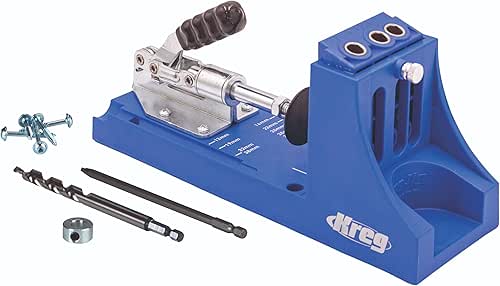
1. Kreg Pocket-Hole Jig K4
The Kreg K4 is a traditional pocket-hole jig that has been widely used by hobbyists and experienced woodworkers.
Its benchtop-style design makes it useful for preparing pocket holes in furniture and cabinet components.
Advantages of the Kreg K4
- Integrated workpiece clamping: Helps hold wood securely while drilling.
- Adjustable drilling setup: Accommodates common material thicknesses within the model’s specified range.
- Established design: Familiar to many woodworkers.
- Useful for repeated drilling: Suitable for preparing multiple furniture or cabinet parts.
- Workshop-friendly: Can be positioned at a workbench for regular use.
Limitations of the Kreg K4
- Its older design may be less convenient than newer models with automatic clamping adjustments.
- Securing the jig to a workbench may require additional mounting hardware or clamps.
- It is less compact than smaller portable jigs.
- Availability may vary because it is an older model.
Who Should Consider the Kreg K4?
The K4 can be a practical option for woodworkers who prefer a conventional benchtop-style pocket-hole jig and can obtain a complete, compatible kit.

2. Kreg Pocket-Hole Jig 320
The Kreg 320 is a compact modular pocket-hole jig designed for portability and straightforward setup.
Its adjustable drill-guide arrangement makes it useful for a variety of small woodworking projects.
Advantages of the Kreg 320
- Compact construction: Easy to store and transport.
- Modular drill guides: Allows the guide arrangement to be adjusted for different applications.
- Common material thickness settings: Designed for typical woodworking stock within its specified range.
- Suitable for beginners: Offers a relatively straightforward introduction to pocket-hole joinery.
- Flexible positioning: Useful for certain repairs and smaller assemblies.
Limitations of the Kreg 320
- Requires suitable external clamping.
- Repeated drilling may take longer than with some integrated-clamp models.
- Large production runs may be less convenient.
Who Should Consider the Kreg 320?
The Kreg 320 is worth considering for DIY enthusiasts who want a portable jig for occasional furniture projects, shelving, and repairs.

3. Kreg Pocket-Hole Jig 520
The Kreg 520 is designed to combine portability with a convenient integrated clamping arrangement.
Its rotating handle and adaptable positioning can be useful when moving between a workbench and other work areas.
Advantages of the Kreg 520
- Integrated clamping: Reduces the need for a separate workpiece clamp during jig operation.
- Flexible positioning: Suitable for different workshop arrangements.
- Portable design: Easier to move than some larger benchtop systems.
- Convenient setup: Useful for woodworkers who frequently change workpieces.
- General-purpose capability: Suitable for a range of compatible woodworking projects.
Limitations of the Kreg 520
- Additional accessories may be required for some workbench mounting arrangements.
- It may offer fewer workstation features than larger premium systems.
- Its additional features may be unnecessary for occasional users.
Who Should Consider the Kreg 520?
The Kreg 520 may appeal to woodworkers who want integrated clamping without committing to a larger dedicated workstation.
4. Kreg Pocket-Hole Jig 720Pro
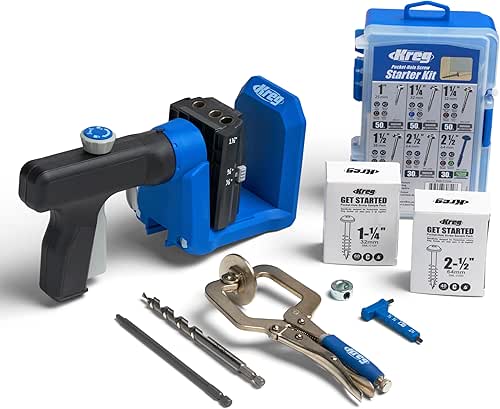
The Kreg 720Pro is an advanced pocket-hole jig designed for efficient drilling and convenient workpiece positioning.
Its Automaxx clamping system is intended to simplify adjustments when working with compatible material thicknesses.
Advantages of the Kreg 720Pro
- Automaxx clamping: Helps streamline setup for different workpiece thicknesses.
- Integrated workpiece support: Designed for convenient drilling operations.
- Workshop-oriented design: Useful for repeated pocket-hole drilling.
- Accessory options: Supports a more organized pocket-hole workstation.
- Efficient operation: May reduce setup time for frequent users.
Limitations of the Kreg 720Pro
- Generally represents a larger investment than basic pocket-hole jigs.
- Requires more storage or workspace than compact models.
- Its advanced features may be unnecessary for occasional projects.
Who Should Consider the Kreg 720Pro?
The 720Pro is worth considering for woodworkers who regularly build cabinets, furniture, or other projects requiring repeated pocket-hole drilling.
5. Kreg Pocket-Hole Jig 310
The Kreg 310 is a compact single-guide pocket-hole jig designed for smaller projects, repairs, and situations where a larger jig may be inconvenient.
Advantages of the Kreg 310
- Compact design: Requires little storage space.
- Portable: Easy to carry between work areas.
- Simple operation: Suitable for learning basic pocket-hole techniques.
- Flexible placement: Useful where larger drilling systems are difficult to position.
- Budget-conscious option: A simpler alternative to larger integrated-clamp systems.
Limitations of the Kreg 310
- Requires a suitable separate clamp.
- Drilling multiple evenly spaced pocket holes may require additional measuring and repositioning.
- It is less convenient for repetitive high-volume work.
- It does not offer the same integrated clamping features as larger models.
Who Should Consider the Kreg 310?
The Kreg 310 can be useful for occasional repairs, small woodworking projects, and woodworkers who want a compact pocket-hole jig.
Which Kreg Pocket-Hole Jig Should You Choose?
The best choice depends on how often you use pocket-hole joinery, the size of your projects, and the features you value.
For Occasional Repairs
A compact jig such as the Kreg 310 may be sufficient for small jobs.
For Beginner DIY Projects
The Kreg 320 offers a portable modular arrangement suitable for many common applications.
For Traditional Workshop Use
The Kreg K4 may appeal to woodworkers who prefer its established benchtop-style design.
For Portable Use With Integrated Clamping
The Kreg 520 offers a combination of mobility and convenient workpiece clamping.
For Frequent Cabinet and Furniture Projects
The Kreg 720Pro provides advanced features that may be useful for repeated drilling operations.
Buying tip: Check the current manufacturer’s specifications, included accessories, replacement parts, and availability before selecting a particular model.
How to Use a Kreg Pocket-Hole Jig: Step-by-Step Instructions
Step 1: Read the Jig Instructions
Review the manufacturer’s setup and safety information for your specific model.
Step 2: Measure the Wood Thickness
Measure the actual material thickness rather than relying only on its nominal lumber size.
Step 3: Adjust the Drill Guide
Set the jig according to the material thickness and model instructions.
Step 4: Set the Drill-Bit Stop Collar
Position the stop collar using the setup method specified for the jig.
An incorrect drilling depth can produce weak joints or cause the bit to drill too far.
Step 5: Mark the Pocket-Hole Locations
Choose positions that provide suitable spacing and avoid interfering with other fasteners or hardware.
Step 6: Clamp the Workpiece
Secure the wood in the jig.
Make sure the workpiece cannot shift during drilling.
Step 7: Drill the Pocket Holes
Use the correct stepped drill bit and drill according to the manufacturer’s instructions.
Clear chips as necessary and avoid forcing the drill.
Step 8: Remove the Workpiece
Release the clamp and inspect the pocket holes.
Check for splitting, excessive tear-out, or incorrect drilling depth.
Step 9: Align the Joint
Position the mating wooden components.
Use a suitable clamp to maintain alignment while driving the screws.
Step 10: Select the Correct Screws
Choose pocket-hole screws appropriate for the material thickness, wood type, and application.
Step 11: Drive the Screws
Use a compatible driver bit and tighten the screws carefully.
Avoid overdriving them.
Step 12: Inspect the Finished Joint
Check that the connected pieces are aligned and that the joint is secure.
If the joint is damaged or loose, correct the problem before continuing the project.
Choosing the Right Pocket-Hole Screws
Pocket-hole screws are designed to work with the angled hole and the materials being joined.
Coarse-Thread Screws
Coarse-thread pocket-hole screws are commonly used with softer woods and certain engineered wood products, subject to the screw manufacturer’s recommendations.
Fine-Thread Screws
Fine-thread pocket-hole screws are commonly used with many hardwoods.
Screw Length
Choose screw length according to the actual material thickness and the jig manufacturer’s screw-selection guidance.
Using a screw that is too long can cause it to protrude through the adjoining workpiece.
Exterior Pocket-Hole Screws
Outdoor projects require suitable corrosion-resistant screws compatible with the wood and environmental conditions.
Why Screw-Head Design Matters
Use the screw-head style specified for the pocket-hole system.
Incompatible screws can damage the pocket hole or fail to seat correctly.
How Strong Are Pocket-Hole Joints?
Pocket-hole joints can provide effective connections in many woodworking applications, but their strength depends on the complete joint design.
Important factors include:
- Wood species and material quality
- Thickness of the joined components
- Screw type and length
- Number and position of pocket holes
- Direction and magnitude of the applied load
- Whether the joint is reinforced
- Whether the application is structural or nonstructural
Pocket-hole joinery is not automatically stronger than mortise-and-tenon joints, dowel joints, dado joints, or other traditional methods.
For load-bearing furniture and other critical connections, use a design with appropriate structural support rather than relying solely on the presence of pocket-hole screws.
Pocket-Hole Joinery vs. Other Woodworking Joints
| Joinery method | Main advantage | Consideration |
|---|---|---|
| Pocket holes | Quick assembly and relatively simple setup | Visible holes on one side and dependence on screw connections |
| Dowels | Concealed alignment and joining method | Requires accurate hole positioning |
| Mortise and tenon | Traditional mechanical joint with many furniture applications | Often requires more preparation and precision |
| Biscuits | Useful for alignment in suitable glued assemblies | Not a substitute for structural reinforcement where required |
| Dados | Useful for locating and supporting fixed shelves | Requires accurate grooves and suitable panel design |
Woodworking Projects You Can Build With a Pocket-Hole Jig
Bookshelves
Pocket holes can be used in suitable bookshelf frames and cabinet assemblies.
Cabinet Face Frames
Pocket-hole joinery is commonly used to connect rails and stiles in cabinet face frames.
Picture Frames
Suitable pocket-hole systems can help connect certain larger wooden frames.
Tables
Pocket holes can be useful for selected table components when the structural design and wood movement are properly addressed.
Storage Cabinets
Cabinet construction may include pocket-hole connections for suitable panels and framing members.
Workshop Projects
Shop cabinets, storage organizers, and some jig components can be assembled using pocket-hole joinery.
Common Kreg Pocket-Hole Jig Mistakes
- Incorrect material thickness setting: Measure the actual wood thickness.
- Wrong drill-bit depth: Set the stop collar correctly.
- Insufficient clamping: Secure the workpiece before drilling.
- Incorrect screws: Choose compatible pocket-hole screws.
- Overdriving screws: Avoid damaging the joint or stripping the wood.
- Drilling too close to an edge: Follow the manufacturer’s hole-placement guidance.
- Ignoring grain direction: Consider how the joint will be loaded.
- Using pocket holes for unsuitable structural connections: Choose joinery appropriate for the application.
- Forgetting wood movement: Allow solid wood panels to expand and contract where necessary.
- Skipping safety precautions: Wear suitable protection and follow the tool instructions.
Kreg Pocket-Hole Jig Maintenance Tips
- Remove sawdust and wood chips after use.
- Inspect the drill guide for damage or excessive wear.
- Check the stepped drill bit for dullness.
- Inspect the stop collar and its locking screw.
- Keep clamping components clean and functioning correctly.
- Replace damaged or worn accessories.
- Store the jig in a clean, dry location.
- Follow the manufacturer’s maintenance instructions.
Frequently Asked Questions About Kreg Pocket-Hole Jigs
What is a Kreg Pocket-Hole Jig used for?
It is used to drill angled pocket holes that allow compatible screws to connect wooden components.
Are Kreg pocket-hole jigs good for beginners?
Yes. Many models are designed to make pocket-hole drilling approachable for beginners, provided the instructions are followed.
Which Kreg pocket-hole jig is best for beginners?
A compact model such as the Kreg 320 may be suitable for beginners, while integrated-clamp models can offer additional convenience.
What is the difference between the Kreg 310 and 320?
The 310 is a compact single-guide design, while the 320 uses a modular arrangement that offers additional flexibility.
What is the difference between the Kreg 520 and 720Pro?
Both offer convenient clamping features, but the 720Pro is designed as a more advanced workshop-oriented system.
Can I use ordinary wood screws with a Kreg jig?
Use screws compatible with the pocket-hole system and material. Ordinary wood screws may not have the correct head shape or other characteristics.
Do pocket-hole joints need glue?
Not always. Some pocket-hole assemblies rely on screws, while others may benefit from suitable adhesive as part of the joint design.
Can pocket holes be used with plywood?
Yes. Pocket-hole joinery can be used with suitable plywood when the material thickness, screw selection, and joint design are appropriate.
Can pocket-hole joinery be used outdoors?
Yes, in appropriate applications using suitable outdoor materials and corrosion-resistant fasteners.
Are pocket-hole joints stronger than dowels?
Neither method is universally stronger. Performance depends on the joint geometry, materials, construction quality, and loading conditions.
Can I hide pocket holes?
Yes. Pocket holes can be placed on less visible surfaces or concealed using compatible plugs where appropriate.
Do I need a special drill bit for a Kreg jig?
Most Kreg pocket-hole systems use a specialized stepped drill bit compatible with the specific jig.
Conclusion: Is a Kreg Pocket-Hole Jig Worth Having?
A Kreg Pocket-Hole Jig can be a useful addition to a woodworking workshop, particularly for projects involving cabinet frames, shelving, furniture components, and other suitable screw-joined assemblies.
The Kreg 310 and 320 offer compact solutions, while the 520 and 720Pro provide additional convenience for woodworkers who use pocket-hole joinery more frequently. The older K4 remains a recognizable traditional jig design.
Choosing the right model depends on your project requirements, available workspace, budget, and preferred clamping arrangement.
Whichever jig you choose, accurate setup, suitable screws, secure clamping, and appropriate joint design are essential for reliable results.
