
Best Places to Find Quality Wood for Your Woodworking Projects
Finding quality wood is one of the most important steps in any successful woodworking project. Whether you are building furniture, making cabinets, constructing outdoor structures, or creating decorative wooden items, the lumber you select affects the appearance, strength, stability, and durability of your finished work.
But where should you buy woodworking lumber?
Local lumberyards, independent sawmills, hardwood dealers, home improvement stores, reclaimed wood suppliers, and online retailers all offer different advantages. The best choice depends on your project, budget, location, equipment, and the type of timber you need.
This guide explores the best places to find quality wood, explains how to evaluate lumber before purchasing, and offers practical advice for getting better value from your woodworking materials.

Why Quality Wood Matters in Woodworking
Even excellent craftsmanship cannot completely overcome unsuitable or defective materials.
Good lumber makes measuring, cutting, joining, and finishing more predictable. It can also reduce waste and improve the reliability of a completed project.
Structural Strength
Wood must be strong enough for its intended purpose.
A chair, table, shelf, or workbench needs suitable material and construction to withstand expected loads.
Species, grade, grain direction, dimensions, and defects all influence performance.
Dimensional Stability
Wood expands and contracts as it absorbs and releases moisture.
Using lumber that has been properly dried for its intended environment can help reduce problems such as warping, shrinking, and cracking.
Appearance
Wood color, grain pattern, knots, and figure contribute to the visual character of a project.
Carefully selected boards can create a more consistent appearance, particularly when building furniture or cabinetry.
Workability
Some woods cut and plane easily, while others require more careful machining.
Choosing material that suits your tools and experience can make a project easier and more enjoyable.
Long-Term Durability
The right timber can improve resistance to everyday wear and, where appropriate, moisture and decay.
Outdoor projects in particular require wood selected for the expected exposure conditions.
Quick Comparison: Where to Buy Quality Wood
| Wood Source | Best For | Main Consideration |
|---|---|---|
| Local lumberyard | Furniture and general woodworking | Selection varies by supplier |
| Independent sawmill | Rough lumber and custom dimensions | May require drying and milling |
| Hardwood dealer | Fine furniture and specialty species | Often higher material costs |
| Home improvement store | Beginner projects and construction lumber | Limited hardwood selection |
| Reclaimed wood supplier | Rustic furniture and distinctive materials | Hidden defects and preparation |
| Online wood retailer | Specialty wood and convenient ordering | Shipping and inability to inspect in person |
1. Local Lumberyards: A Great Starting Point
Local lumberyards are often among the best places to buy wood for woodworking projects.
Unlike general home improvement stores, some independent lumberyards specialize in hardwoods, cabinet-grade materials, or furniture-making lumber.
Advantages of Buying From Local Lumberyards
- Inspect boards personally: Check grain, straightness, knots, and other characteristics before purchasing.
- Ask knowledgeable staff: Some suppliers can explain species, grades, moisture content, and suitable applications.
- Find useful dimensions: Specialty yards may carry thicker, wider, or longer boards.
- Reduce shipping costs: Local pickup can be more economical for larger orders.
- Build supplier relationships: Regular customers may learn about new inventory and available services.
What to Ask at a Lumberyard
Before buying, ask:
- What wood species are currently available?
- Is the lumber kiln-dried or air-dried?
- What moisture content is typical for this stock?
- Is the lumber rough-sawn or surfaced?
- What grades are available?
- Is pricing based on board feet, linear feet, or individual boards?
- Are cutting, planing, or delivery services available?
Buying tip: Bring your project cutting list and actual required dimensions. This makes it easier to select boards that provide a good yield.
2. Independent Sawmills: Great for Rough Lumber
Independent sawmills can be valuable sources of domestic hardwoods, locally harvested timber, live-edge slabs, and unusual board dimensions.
They may offer species that are difficult to find at ordinary retail stores.
Benefits of Buying Directly From a Sawmill
- Access to locally harvested timber.
- Potential availability of wider or thicker boards.
- Opportunities to purchase rough-sawn lumber.
- Possible custom sawing services.
- Access to live-edge slabs and distinctive grain patterns.
Important Considerations
Not every sawmill sells furniture-ready lumber.
Some boards may be green, partially air-dried, or rough-sawn.
Before purchasing, confirm:
- The wood’s drying history.
- Approximate moisture content.
- Actual board dimensions.
- Whether additional milling is required.
- Whether the boards contain significant checks or distortion.
Buying tip: If you do not own a jointer, planer, or other milling equipment, ask whether the sawmill can prepare boards to your required dimensions.
3. Specialty Hardwood Dealers: Ideal for Fine Furniture
Specialty hardwood dealers often carry a broader selection of furniture-grade lumber than general building suppliers.
They may stock domestic hardwoods such as oak, maple, walnut, cherry, and ash, along with imported species and figured lumber.
Why Choose a Hardwood Dealer?
- Greater variety of wood species.
- Access to selected grades and grain patterns.
- Potential availability of matched boards.
- Specialty thicknesses and widths.
- Wood suitable for fine furniture and decorative projects.
What to Look For
Choose suppliers that clearly explain wood species, grades, dimensions, and drying methods.
If purchasing imported timber, ask about its origin and any relevant sourcing documentation.
Buying tip: When building visible furniture components, consider selecting boards together so their color and grain complement one another.
4. Home Improvement Stores: Convenient for Beginners
Large home improvement stores can be convenient sources of pine, construction lumber, plywood, and common project boards.
They are often suitable for simple shelves, workshop furniture, storage projects, and other beginner builds.
Advantages
- Convenient locations.
- Commonly stocked lumber dimensions.
- Access to plywood and sheet materials.
- Suitable supplies for basic DIY projects.
- Availability of related hardware and tools.
Limitations
Hardwood selection may be limited, and some boards may have knots, warping, or other imperfections.
Construction-grade lumber is not always the best choice for precision furniture work without additional preparation.
Buying tip: Examine each board rather than selecting only the top pieces in a stack. Sight along the edges and faces to check for twists, bows, and crooks.
5. Reclaimed and Salvaged Wood Suppliers
Reclaimed wood can bring distinctive character to woodworking projects.
It may come from old buildings, flooring, furniture, beams, or other previously used wooden materials.
Benefits of Reclaimed Wood
- Distinctive appearance and aged character.
- Potential access to older timber.
- Opportunities to reuse existing materials.
- Suitable material for rustic furniture and decorative projects.
- Possible reduction in demand for newly harvested wood.
Where to Find Reclaimed Wood
Possible sources include:
- Architectural salvage businesses.
- Reclaimed lumber dealers.
- Building-material reuse centers.
- Furniture restoration workshops.
- Local demolition and renovation projects, with proper permission.
- Community marketplaces and woodworking groups.
Safety Considerations
Reclaimed timber may contain hidden nails, screws, staples, paint, preservatives, or other contaminants.
Some older coatings may contain hazardous substances, including lead.
Before machining reclaimed wood:
- Determine its origin and previous use where possible.
- Inspect for rot and insect damage.
- Check for embedded metal using appropriate detection methods.
- Assess possible paint or chemical contamination.
- Avoid machining unknown or potentially hazardous materials until they have been properly evaluated.
- Use suitable dust control and protective equipment.
Buying tip: Reclaimed wood is not always cheaper than new lumber. Include cleaning, inspection, milling, and waste in your cost estimate.
6. Online Wood Retailers: Convenient Access to Specialty Lumber
Online lumber retailers make it possible to purchase wood without visiting a physical supplier.
They can be particularly useful when looking for specialty species, turning blanks, small project boards, or lumber unavailable locally.
However, buying wood online requires careful attention to dimensions, product descriptions, shipping costs, and return policies.
Online Wood Suppliers to Explore
The following suppliers were included in the original guide. They are presented as places to investigate rather than a verified ranking. Product selection, shipping arrangements, availability, and business details may change, so confirm current information directly with each supplier before ordering.
| Supplier | Website | What to Explore |
|---|---|---|
| Woodworkers Source | Visit Website | Hardwood lumber and woodworking project materials. |
| KJP Select Hardwoods | Visit Website | Hardwood species, specialty boards, and woodworking supplies. |
| The Hardwood Store | Search supplier by name | Hardwood lumber and related materials. |
| Northwest Timber | Search supplier by name | Domestic hardwoods and figured wood. |
| Groff & Groff Lumber | Search supplier by name | Domestic and imported hardwood lumber. |
| Hearne Hardwoods | Search supplier by name | Specialty hardwoods and decorative timber. |
| West Penn Hardwoods | Search supplier by name | Domestic and imported hardwood selections. |
| Hartzell Wood Stock | Search supplier by name | Hardwood lumber and woodworking materials. |
| Forest 2 Home | Search supplier by name | Domestic hardwood project lumber. |
| Woodcraft | Visit Website | Woodworking lumber, project blanks, tools, and supplies. |
Note: Some supplier links in the original article pointed to unrelated third-party blog posts rather than directly to the named businesses. Those misleading links have been removed. Supplier names without a verified direct website are left unlinked rather than assigning potentially incorrect destinations.
Advantages of Buying Wood Online
- Access to species not available locally.
- Convenient product comparisons.
- Availability of small project packs and specialty blanks.
- Potential access to figured and decorative timber.
- Delivery directly to your home or workshop.
Disadvantages of Buying Wood Online
- You may not be able to inspect individual boards.
- Shipping can significantly increase total cost.
- Photographs may not show every defect.
- Actual color and grain may differ from product images.
- Returns can be difficult for large or heavy lumber orders.
How to Buy Lumber Online Safely
- Confirm the exact wood species.
- Check actual dimensions and whether boards are rough or surfaced.
- Read grading and defect descriptions.
- Ask about moisture content and drying methods.
- Determine whether you are buying the photographed board or representative stock.
- Review shipping and handling charges.
- Check return and damage policies.
- Compare the delivered price against local suppliers.
Buying tip: For expensive or highly figured wood, ask whether the supplier can provide photographs of the exact board you will receive.
7. Community Marketplaces and Local Woodworking Groups
Local woodworking communities can sometimes help you locate lumber, offcuts, reclaimed boards, and small quantities of specialty timber.
Possible sources include:
- Local woodworking clubs.
- Community bulletin boards.
- Online local marketplaces.
- Estate and workshop sales.
- Woodturning groups.
- Furniture makers selling surplus stock.
These sources may be especially useful for smaller projects or unusual materials.
Questions to Ask Private Sellers
- What species is the wood?
- How long has it been stored?
- Was it kiln-dried or air-dried?
- Has it been stored indoors or outdoors?
- Are there known defects or insect problems?
- What are the actual dimensions?
- Can you inspect the boards before purchasing?
Private-sale descriptions may be incomplete, so inspect materials carefully and avoid assuming the seller has accurately identified the species or condition.
Understanding Hardwood and Softwood Before Buying
Wood species selection is just as important as choosing a supplier.
Hardwoods
Hardwoods generally come from broadleaf flowering trees.
Common woodworking hardwoods include oak, maple, walnut, cherry, and ash.
Many are valued for their appearance, wear resistance, and suitability for furniture.
Softwoods
Softwoods generally come from coniferous trees.
Examples include pine, spruce, cedar, and redwood.
They are widely used for construction, furniture, and outdoor projects.
Remember that hardwood and softwood are botanical categories, not absolute measures of physical hardness.
For a more detailed explanation, see our guide to understanding wood and timber types.
Specialty Woods for Unique Woodworking Projects
Figured Hardwoods
Figured maple, walnut, and other decorative woods may display curly, quilted, or unusual grain patterns.
They are popular for boxes, furniture accents, decorative panels, and artistic woodworking.
Imported and Exotic Hardwoods
Some specialty dealers offer imported species such as teak and other decorative hardwoods.
These woods can have distinctive properties, but sourcing requirements, restrictions, prices, and environmental considerations vary.
Confirm species identity and responsible sourcing before purchasing.
Bamboo Products
Bamboo is a grass rather than a conventional timber species.
Engineered bamboo products are used for flooring, panels, furniture, and other applications.
Performance and environmental impact depend on the particular product and manufacturing process.
Live-Edge Slabs
Live-edge slabs retain part of the tree’s natural outer profile.
They are popular for tables, benches, shelves, and decorative furniture.
Before purchasing, inspect for checks, internal defects, moisture content, and sufficient usable thickness.
How to Inspect Lumber Before Buying
Learning to inspect boards is one of the most useful woodworking skills.
1. Check for Straightness
Look along the length of each board to identify bowing, crooking, and twisting.
Check the face for cupping.
Minor distortion may be manageable, but severe warping can result in substantial material loss during milling.
2. Examine the Grain
Look for grain that suits your project.
Straight grain is often desirable for structural components and predictable machining.
Decorative figure may be more important for visible panels and furniture accents.
3. Inspect Knots
Knots can add visual character, but loose or large knots may reduce strength and complicate machining.
Consider their position relative to joints, edges, and heavily loaded components.
4. Look for Checks and Splits
Examine board ends and faces for cracks.
Remember that damaged sections may need to be removed before the wood can be used.
5. Look for Insect Damage
Check for unusual holes, tunnels, damaged surfaces, and signs of possible active infestation.
Avoid bringing potentially infested lumber into your workshop without appropriate assessment.
6. Evaluate Color and Appearance
When selecting boards for furniture, compare their colors and grain patterns.
Boards from different batches may vary noticeably.
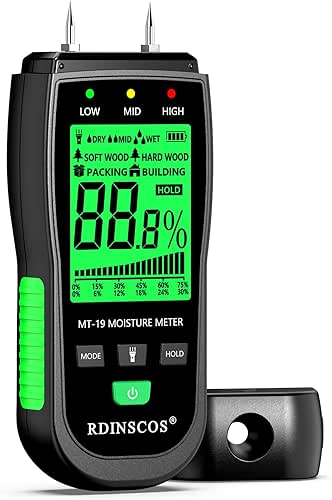
7. Check Moisture Content
A moisture meter can help determine whether lumber is appropriately dried for your project.
Follow the meter manufacturer’s instructions and account for species-specific corrections where required.
Why Moisture Content Matters When Buying Wood
Wood naturally absorbs and releases moisture as surrounding humidity changes.
Improperly dried lumber can shrink, cup, twist, or crack after construction.
Air-Dried Lumber
Air-dried lumber is dried through natural airflow and environmental conditions.
Its moisture content depends on climate, storage, and drying time.
Kiln-Dried Lumber
Kiln-dried lumber is dried under controlled conditions.
It is commonly used for interior furniture and cabinetry because its moisture content can be reduced to a more suitable range.
Equilibrium Moisture Content
Equilibrium moisture content, or EMC, is the moisture level wood approaches under particular temperature and humidity conditions.
Even properly dried lumber continues to exchange moisture with its surroundings.
What Moisture Content Should You Look For?
For indoor furniture in climate-controlled environments, lumber is often used at approximately 6% to 9% moisture content, although appropriate levels vary by region and intended use.
Exterior projects generally experience different moisture conditions.
The key is selecting wood that is suitably dried and compatible with its expected environment.

Understanding Common Lumber Defects
Knots
Knots occur where branches grew from the tree.
Some knots are sound and visually attractive, while others can weaken the material.
Checks and Splits
Checks are cracks that develop in wood, often during drying.
Splits are more extensive separations that can make a board unsuitable for certain applications.
Cupping
Cupping occurs when a board curves across its width.
Bowing
Bowing is a lengthwise curve visible along the broad face of a board.
Crooking
Crooking is a sideways curve along a board’s length.
Twisting
Twisting occurs when different parts of a board rotate out of the same plane.
Insect Damage
Insect holes and internal galleries may affect strength or indicate a possible infestation.
Inspect suspicious lumber carefully before purchasing or storing it.
Rough-Sawn vs. Surfaced Lumber: Which Should You Buy?
Rough-Sawn Lumber
Rough-sawn boards have not been fully surfaced to finished dimensions.
They may provide more flexibility when preparing custom-sized parts.
However, they usually require additional milling.
Surfaced Lumber
Surfaced lumber has been planed or otherwise prepared to more consistent dimensions.
It is convenient for woodworkers who do not have extensive milling equipment.
Common Surfacing Terms
- S2S: Surfaced on two sides.
- S3S: Commonly surfaced on two faces with one edge straightened.
- S4S: Surfaced on four sides.
Supplier terminology can vary, so confirm the exact preparation and dimensions before ordering.
Which Is Better for Beginners?
Surfaced lumber is generally more convenient for beginners.
Rough lumber can be economical or useful for custom projects when you have access to suitable milling tools.
Understanding Lumber Pricing and Board Feet
Hardwood lumber is often priced by the board foot, while other products may be sold by the linear foot, square foot, sheet, or individual piece.
What Is a Board Foot?
One board foot equals 144 cubic inches of wood.
Board feet = Thickness (inches) × Width (inches) × Length (inches) ÷ 144
Board Foot Calculation Example
Suppose you purchase a board measuring:
- 1 inch thick.
- 8 inches wide.
- 72 inches long.
The calculation is:
1 × 8 × 72 ÷ 144 = 4 board feet.
If the price is $8 per board foot, the calculated lumber cost is:
4 × $8 = $32.
This example excludes taxes, shipping, and additional services.
Suppliers may use nominal or rough dimensions when calculating board footage, so confirm their pricing method.
Compare Total Usable Material
A cheaper board is not necessarily better value if much of it must be discarded because of defects or distortion.
Consider how much usable wood you will obtain after trimming and milling.
How Much Extra Lumber Should You Buy?
Most woodworking projects require some allowance for waste.
Extra material may be needed because of:
- Cutting and trimming.
- Knots and defects.
- Milling losses.
- Grain matching.
- Measurement or cutting mistakes.
- Unexpected design adjustments.
For straightforward projects, an allowance of approximately 10% to 20% may be a useful planning starting point.
Projects involving rough lumber, complicated cutting layouts, extensive defects, or careful grain matching may require more.
Prepare a cutting diagram before purchasing to improve your estimate.
Choosing the Best Wood Source for Your Project
| Project | Wood to Consider | Where to Shop |
|---|---|---|
| Dining table | Oak, maple, walnut | Hardwood dealer or lumberyard |
| Bookshelf | Pine, plywood, suitable hardwood | Lumberyard or home improvement store |
| Outdoor bench | Suitable cedar, redwood, or exterior-rated lumber | Lumberyard or outdoor lumber supplier |
| Decorative box | Cherry, maple, walnut | Specialty dealer or online retailer |
| Rustic coffee table | Suitable reclaimed hardwood | Salvage dealer or reclaimed wood supplier |
| Live-edge tabletop | Properly dried hardwood slab | Sawmill or slab dealer |
How to Build a Good Relationship With a Lumber Supplier
Developing a relationship with a reliable supplier can make future woodworking projects easier.
Ask Questions
Learn about the wood species, grades, drying methods, and services offered.
Explain Your Projects
Tell the supplier what you plan to build and the dimensions you need.
They may be able to suggest suitable stock or help you avoid unnecessary waste.
Understand Their Inventory
Some suppliers specialize in domestic hardwoods, while others focus on construction lumber, slabs, or imported timber.
Ask About Milling Services
Cutting, planing, and straight-line ripping services can be valuable if your workshop has limited equipment.
Check for Offcuts and Short Boards
Some dealers sell shorter boards or offcuts that may be suitable for boxes, shelves, and smaller projects.
How to Store Wood After Purchasing
Good storage helps preserve lumber quality between purchase and use.
- Store boards in a suitable, dry environment.
- Keep lumber off damp floors and ground surfaces.
- Support long boards adequately to reduce distortion.
- Use properly aligned spacers when stacking lumber that requires airflow.
- Avoid unnecessary exposure to rain or direct moisture.
- Allow timber to adjust toward workshop conditions before precision machining.
- Monitor moisture content when dimensional stability is important.
Do not assume that bringing a wet board indoors for a day or two makes it suitable for furniture construction. Proper drying can take considerably longer.
Responsible and Sustainable Wood Purchasing
Wood is a renewable material when forests are managed responsibly, but sourcing practices vary.
Ask About Wood Origin
Suppliers may be able to provide information about where timber was harvested and processed.
Look for Credible Certification
Certification systems, such as FSC, may help buyers identify products associated with defined forest-management and chain-of-custody standards.
Check the certification details rather than assuming every product from a supplier is certified.
Consider Reclaimed Materials
Suitable reclaimed lumber can extend the useful life of existing wood.
However, its overall environmental impact depends on factors such as transportation, preparation, and material condition.
Reduce Waste
Careful cutting plans, efficient board selection, and creative use of offcuts can reduce unnecessary material consumption.
Common Mistakes When Buying Wood
Buying Only on Price
Cheap lumber may cost more in the long run if significant portions are unusable.
Ignoring Moisture Content
Wood that is too wet for its intended environment can shrink or distort after construction.
Choosing the Wrong Species
A wood species that works well indoors may not be suitable for prolonged outdoor exposure.
Overlooking Actual Dimensions
Nominal lumber sizes may differ from finished dimensions.
Always verify actual measurements.
Failing to Inspect Boards
Knots, cracks, twists, and other defects can affect the usable yield.
Underestimating Shipping Costs
Heavy or oversized lumber can be expensive to transport.
Purchasing Rough Lumber Without Milling Equipment
Rough lumber often requires additional preparation before it can be used for accurate joinery.
Not Buying Enough Material
Failing to account for trimming and defects may interrupt a project or force you to purchase mismatched replacement boards.
Frequently Asked Questions About Buying Quality Wood
Where is the best place to buy hardwood for furniture?
Specialty hardwood dealers and well-stocked local lumberyards are often good choices because they may offer furniture-grade lumber in a variety of species and dimensions.
Is buying wood from a sawmill cheaper?
It can be, particularly when purchasing rough lumber, but additional drying, milling, transportation, and waste may affect the total cost.
Is lumber from a home improvement store suitable for furniture?
Yes, for many projects. However, inspect boards carefully and choose suitable material for the design and expected use.
What is the best wood for beginner woodworking projects?
Pine and other readily available, workable timbers are often practical choices for beginners.
Should I buy rough-sawn or surfaced lumber?
Surfaced lumber is convenient for beginners, while rough-sawn lumber offers more flexibility for woodworkers with suitable milling equipment.
Can I buy good hardwood online?
Yes. Online specialty suppliers may offer useful selections. Check dimensions, grading, moisture information, shipping costs, and return policies before ordering.
How do I know whether lumber is properly dried?
Ask about its drying history and use a suitable moisture meter when necessary.
What is the difference between kiln-dried and air-dried wood?
Kiln-dried lumber is dried under controlled conditions, while air-dried lumber dries through natural airflow and environmental conditions.
Is reclaimed wood safe for woodworking?
It can be, but reclaimed materials should be assessed for hidden metal, contamination, insect damage, decay, and potentially hazardous coatings before machining.
What does S4S lumber mean?
S4S generally means the lumber has been surfaced on all four sides.
What is a board foot?
A board foot is a lumber volume measurement equal to 144 cubic inches.
How much extra lumber should I purchase?
A 10% to 20% allowance can be a useful starting point for some straightforward projects, but rough lumber and complicated cutting layouts may require more.
Can I buy wood directly from a tree service?
Some tree services may have logs or salvaged material available, but freshly cut wood requires proper processing and drying. Logs and urban timber may also contain hidden metal or other hazards.
What is the best wood for outdoor furniture?
Suitable cedar, redwood, white oak heartwood, and properly rated treated lumber are among the options. Selection depends on exposure, design, and maintenance.
Why is hardwood lumber often more expensive than pine?
Pricing depends on species availability, harvesting, processing, drying, grading, transportation, and market demand.
How should I compare lumber prices?
Compare equivalent species, grades, dimensions, moisture conditions, and the amount of usable material. Include milling, shipping, and taxes.
Should I choose wood based on grain pattern?
Grain matters for appearance, workability, and sometimes strength. Consider it alongside the project’s structural and dimensional requirements.
How can I find a local sawmill?
Search for sawmills and hardwood suppliers in your area, contact local woodworking groups, and ask nearby lumber dealers for recommendations.
Is expensive wood always better?
No. The best wood is material that meets the project’s functional, visual, and budget requirements.
What should I bring when visiting a lumberyard?
Bring a cutting list, measurements, species preferences, budget, and a way to record board dimensions. A tape measure and moisture meter may also be useful.
Final Lumber Buying Checklist
Before purchasing wood for your next project, review these points:
- Have I chosen a suitable wood species?
- Do I know the actual dimensions required?
- Is the lumber appropriately dried?
- Have I inspected the boards for warping and defects?
- Is the grain suitable for the intended components?
- Do I have the tools needed to prepare the lumber?
- Have I allowed for waste and trimming?
- Have I compared the total delivered cost?
- Is the wood appropriate for indoor or outdoor use?
- Have I considered the supplier’s sourcing information?
Conclusion: Finding Quality Wood Starts With Knowing What You Need
The best place to find quality wood depends on the woodworking project you want to build.
Local lumberyards and hardwood dealers are excellent starting points for furniture-grade material. Independent sawmills can provide rough lumber and unusual dimensions. Home improvement stores offer convenient supplies for beginner projects, while reclaimed wood dealers provide opportunities to reuse distinctive materials.
Online retailers expand your options when local suppliers do not carry the species or dimensions you need.
Regardless of where you shop, focus on selecting lumber with suitable moisture content, dimensions, grain, structural properties, and overall condition.
Careful material selection can reduce waste, improve woodworking accuracy, and help you create projects that remain attractive and useful for years.
Quality woodworking begins with quality materials. Take the time to choose your wood carefully, and every stage of your project becomes more rewarding.